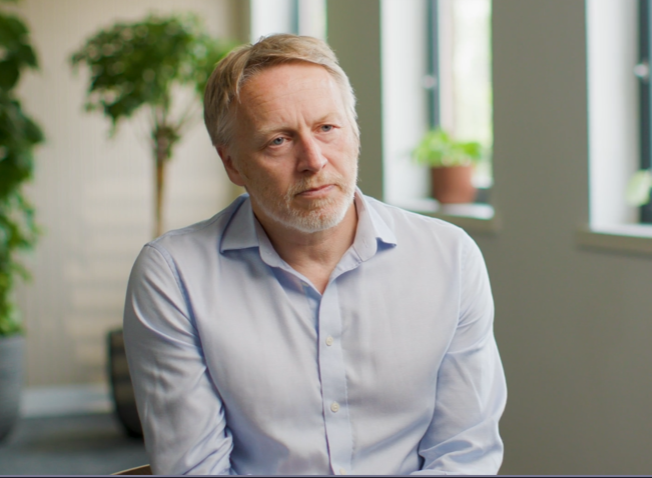
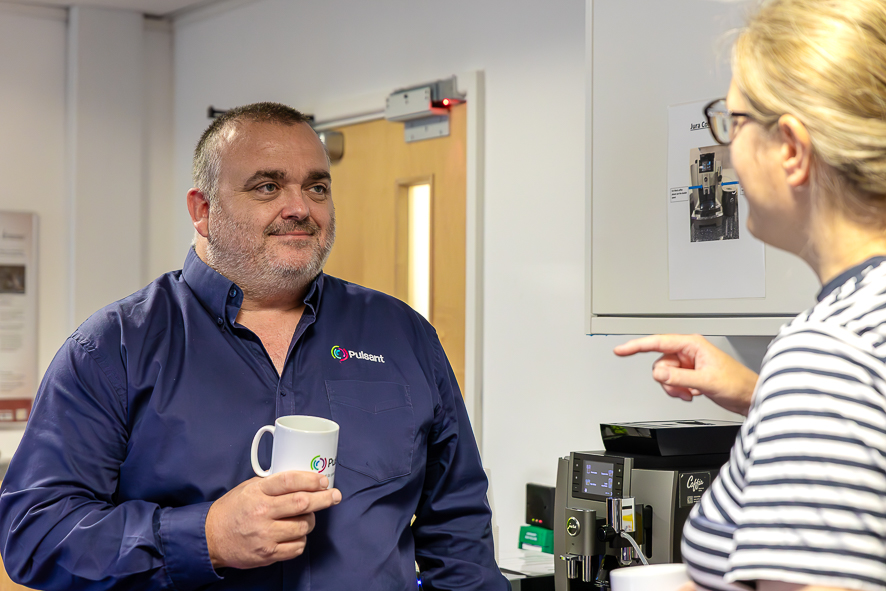
We sat down with Kevin May, Data Centre Manager, to hear about his journey from the armed forces into Pulsant. From telecommunications in the Army to leading multiple data centres, Kevin shares how his military experience shaped his career and the lessons he’s learned along the way.
What were you doing prior to joining Pulsant?
Immediately prior to joining Pulsant in August 2022, I was working as a delivery driver for Sainsbury’s. Prior to that, I worked at a Digital Realty data centre, from when I left the Army in July 2007 until leaving for Sainsbury in 2021.
I served in the Army from January 1995 to July 2007. During that time, I served within the infantry and became a Regimental Signals Detachment Commander within my battalion, the 1st Battalion Royal Welch Fusiliers.
 I was responsible for ensuring personnel had access to functional telecommunications equipment and that communication networks remained operational at all times, both on deployment in operational theatres such as Northern Ireland and Iraq, and during training exercises in challenging environments including Cyprus, Kenya, Canada, the United States, Slovakia and the UK.
How did you come to hear about the role at Pulsant and why did you feel it was a good fit?
I was approached by our CEO, Rob Coupland, in early 2022, having worked under Rob’s leadership previously at TelecityGroup. Pulsant was looking for a Data Centre Manager and Rob reached out after learning I had left Digital Realty.
I had enjoyed working under Rob’s leadership previously at TelecityGroup and I was excited by Pulsant’s future plans. I was also keen to return to the data centre industry and to step back into a management role. The opportunity to lead a high quality facility, combined with Pulsant’s commitment to learning and development, made the role especially appealing.
How would you describe your transition from the military into the data centre industry?
Relatively straightforward. I had spent a significant amount of time researching the industry and I had completed fibre and copper cabling training at CTTS, gaining qualifications recognised in the civilian world.
I also learned from the experiences of fellow veterans, taking on board both positive and negative insights to shape my own transition.
The timing helped too. I left the Army early July and started at TelecityGroup at the end of the month. There was little time to reflect and I moved straight into civilian life. Once I started, I was fortunate to work alongside highly professional people whose approach and mindset aligned closely with my own, despite not having a military background.
Which skills from your time in the armed forces helped you transition into the data centre industry?
Several skills translated directly:
- Knowledge: My telecommunications background gave me a strong foundation, particularly as digital communications rapidly expanded during the 2000s.
- Problem solving: The ability to stay calm under pressure and respond methodically has been invaluable, especially during incidents such as power or cooling failures.
- Discipline: Working to Standard Operating Procedures, or SOPs, is second nature and ensures consistency and high operational standards.
- Teamwork and flexibility: Experience in diverse, high-pressure environments translates well to data centre operations and shift based work.
- Safety awareness: A strong safety mindset aligns perfectly with the critical nature of data centre environments.
- Project management: Planning and executing tasks with precision is directly transferable.
- Resilience: Handling pressure, adapting quickly and maintaining focus in demanding situations.
What is it like to work at Pulsant and how does that compare with your time in the military?
 I find it both rewarding and enjoyable. Managing three data centres, each with different characteristics and teams, provides constant challenge and variety. The camaraderie is very similar to the Army. There is a shared sense of purpose, and the ability to switch quickly from a positive, relaxed culture to a focused, high performance response during incidents feels very familiar. That balance makes it a highly engaging place to work.
Please tell us about your career journey with Pulsant so far.
I joined Pulsant in August 2022 as Data Centre Manager for the newly acquired Reading SE-3 site. My initial focus was bringing the site up to Pulsant standards, including implementing significant health and safety improvements. Alongside this, I undertook leadership and role specific training. I also oversaw successful ISO and accreditations, as well as plant replacement and rebranding projects.
Following an organisational restructure in June 2024, I was appointed Data Centre Manager for 2 additional sites. This marked a significant step in my career and reflected the company’s confidence in my ability to lead multiple sites.
Since then, I have continued my professional development and taken on two apprentices, passing on my knowledge and experience.
What learning and development opportunities are available at Pulsant?
Pulsant offers a wide range of development opportunities. I have completed several courses that have supported my progression and enabled me to take on greater responsibility.
There is access to unlimited eLearning through Udemy, as well as internal training via the Pulsant Skills Hub. The company also actively supports apprenticeships and graduate programmes.
New starters are paired with a buddy, supported through regular one to one meetings, and benefit from a comprehensive induction programme, including in person sessions with people and senior leadership.
How does the company support your mental and physical wellbeing?
 Pulsant places strong emphasis on wellbeing. Support includes a dedicated People team, trained Mental Health First Aiders, and access to an Employee Assistance Programme offering confidential advice.
People also benefit from a wellbeing day, birthday leave, private healthcare, and access to digital wellbeing tools such as Champion Health. Additional initiatives include cycle to work schemes, cashback rewards and regular social events.
Why is the data centre industry a good place to build a career?
The data centre industry is constantly evolving, offering continuous learning and development. Technology is advancing rapidly, with increasing power density and demand driving innovation.
When I started, a 1kW rack was standard. Now we are deploying racks exceeding 20kW. At the same time, the industry is focusing on sustainability and efficiency, creating new challenges and opportunities.
Given its central role in supporting cloud computing and AI, it is also one of the most critical and future proof industries globally.
What advice would you give to someone leaving the military and considering a career in data centres?
Take time during resettlement to research the industry and understand where you want to go. Use that knowledge to guide your training and build on your transferable skills.
Have a clear plan, both short and long term. Set goals and work towards them with focus and humility.
Most importantly, know your worth. Transitioning can feel daunting, but the skills developed in the military are highly valuable. With the right mindset and preparation, it is entirely possible to build a successful career in this industry.